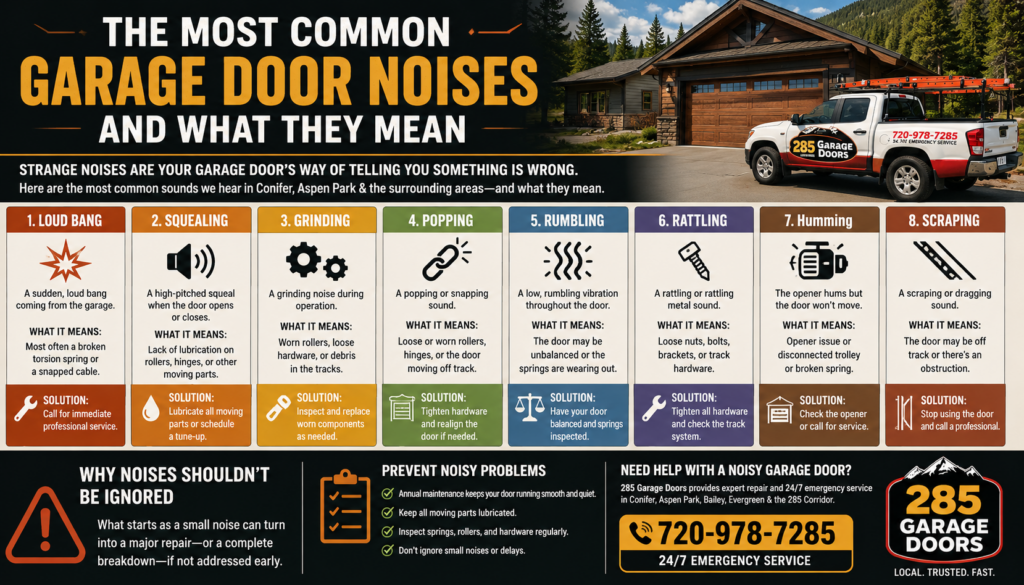
The Most Common Garage Door Noises – And What They Mean
Understanding Garage Door Sounds
Your garage door is one of the largest moving systems in your home, and when something isn’t working correctly, it will often let you know. Strange noises like grinding, squeaking, banging, or popping are your garage door’s way of warning you that something needs attention.
For homeowners in Conifer, Aspen Park, and Colorado’s foothill communities, garage doors deal with additional challenges including temperature swings, snow, moisture, and everyday wear and tear.
Some noises are simple maintenance issues, while others may be signs of a serious problem that requires professional garage door repair.
Here are the most common garage door sounds and what they usually mean.
1. A Loud Bang From the Garage
What It Sounds Like:
A sudden, loud “pop” or “bang” — sometimes compared to a firecracker or something falling inside the garage.
What It Usually Means:
A loud bang is one garage door noise you should never ignore. The most common cause is a broken garage door spring.
Garage door springs are responsible for counterbalancing the weight of your door. When a torsion spring breaks, the stored tension releases suddenly, creating a loud noise.
Other signs of a broken spring include:
- garage door will not open
- opener struggles but the door barely moves
- door feels extremely heavy
- visible gap in the spring coil
- cables appear loose
What To Do:
Do not attempt to lift the door manually or repair the spring yourself. Garage door springs are under extreme tension and require professional tools and training.
Call a garage door repair technician before operating the system again.
2. Squeaking or Squealing Noises
What It Sounds Like:
A high-pitched squeak when the garage door opens or closes.
What It Usually Means:
This is one of the most common garage door complaints and is often related to friction between moving parts.
Possible causes include:
- dry rollers
- hinges needing lubrication
- worn bearings
- lack of routine maintenance
- metal parts rubbing together
Colorado’s dry climate can contribute to garage door components drying out faster than expected.
What To Do:
A professional garage door tune-up can inspect moving parts, lubricate components properly, and identify worn hardware before it causes a larger issue.
3. Grinding Sounds During Operation
What It Sounds Like:
A rough grinding or metal-on-metal noise while the door is moving.
What It Usually Means:
Grinding usually means parts are experiencing excessive friction or wear.
Common causes include:
- worn rollers
- damaged hinges
- opener gear problems
- track issues
- lack of lubrication
Ignoring grinding noises can put additional strain on the garage door opener and other components.
What To Do:
Stop using the door if the noise suddenly becomes worse. Continued operation may turn a small repair into a more expensive replacement.
4. Popping or Snapping Sounds
What It Sounds Like:
A repeated popping, snapping, or clicking noise while the garage door moves.
What It Usually Means:
This can indicate several potential problems, including:
- worn rollers
- loose hinges
- damaged sections
- spring tension issues
- parts shifting during movement
If the garage door also shakes or moves unevenly, the problem should be inspected sooner rather than later.
What To Do:
Schedule service before the door gets stuck, comes off track, or causes additional damage.
5. Rattling While the Door Moves
What It Sounds Like:
Loose vibration or shaking noises.
What It Usually Means:
Garage doors create movement every time they operate, and over time hardware can loosen.
Common causes include:
- loose nuts and bolts
- worn hinges
- loose opener brackets
- track vibration
- aging rollers
Mountain homes around Conifer and Aspen Park may also experience additional vibration from wind exposure and temperature changes.
What To Do:
Do not randomly tighten garage door components without knowing their purpose. Certain parts are connected to high-tension systems and should only be adjusted by a professional.
6. Scraping or Dragging Sounds
What It Sounds Like:
A harsh scraping noise as the door travels up or down.
What It Usually Means:
Scraping sounds can indicate:
- the garage door is rubbing against the track
- rollers are damaged
- track alignment problems
- the door is beginning to come off track
This is especially important to address quickly.
What To Do:
If your garage door looks crooked or uneven, stop operating it immediately. A door that comes completely off track can become unsafe.
7. Humming From the Garage Door Opener
What It Sounds Like:
The opener motor runs or hums, but the door does not move.
What It Usually Means:
Possible causes include:
- broken spring
- stripped opener gear
- disconnected trolley
- opener motor failure
- locked or jammed garage door
Many homeowners assume this means they need a new opener, but sometimes the opener is only reacting to another problem with the door.
What To Do:
Have the entire garage door system inspected before replacing the opener.
Why Garage Door Noises Are More Common in Colorado
Homes throughout Conifer, Aspen Park, and the Highway 285 corridor experience conditions that can be tough on garage doors.
Colorado weather can create issues because of:
- freezing temperatures
- warm daytime/cold nighttime swings
- snow and moisture exposure
- dry air affecting moving parts
- seasonal expansion and contraction
Regular garage door maintenance helps keep everything moving smoothly and reduces unexpected breakdowns.
When Should You Call for Garage Door Repair?
A little noise does not always mean an emergency, but certain sounds should not be ignored.
Call a professional if you notice:
- sudden loud banging sounds
- grinding metal noises
- uneven door movement
- loose or hanging cables
- shaking while operating
- garage door gets stuck
- opener struggles to lift the door
- new noises that continue getting worse
Small problems are almost always easier and less expensive to fix early.
Preventing Noisy Garage Doors
The best way to prevent loud garage door problems is routine maintenance.
A professional garage door inspection can include:
- checking spring condition
- inspecting cables
- lubricating moving parts
- adjusting tracks
- testing door balance
- checking opener operation
- inspecting rollers and hinges
- verifying safety features
For many Colorado homeowners, an annual garage door inspection is a smart investment.
Garage Door Repair in Conifer & Aspen Park, CO
If your garage door is squeaking, grinding, banging, or making strange noises, don’t wait until it stops working completely.
285 Garage Doors provides professional garage door repair services throughout:
- Conifer
- Aspen Park
- Bailey
- Evergreen
- Morrison
- Pine
- surrounding Highway 285 communities
From broken springs and worn rollers to opener problems and emergency repairs, we’ll help keep your garage door operating safely and reliably.
Call 720-978-7285 today to schedule garage door service.