
Can a New Garage Door Help Save Energy?
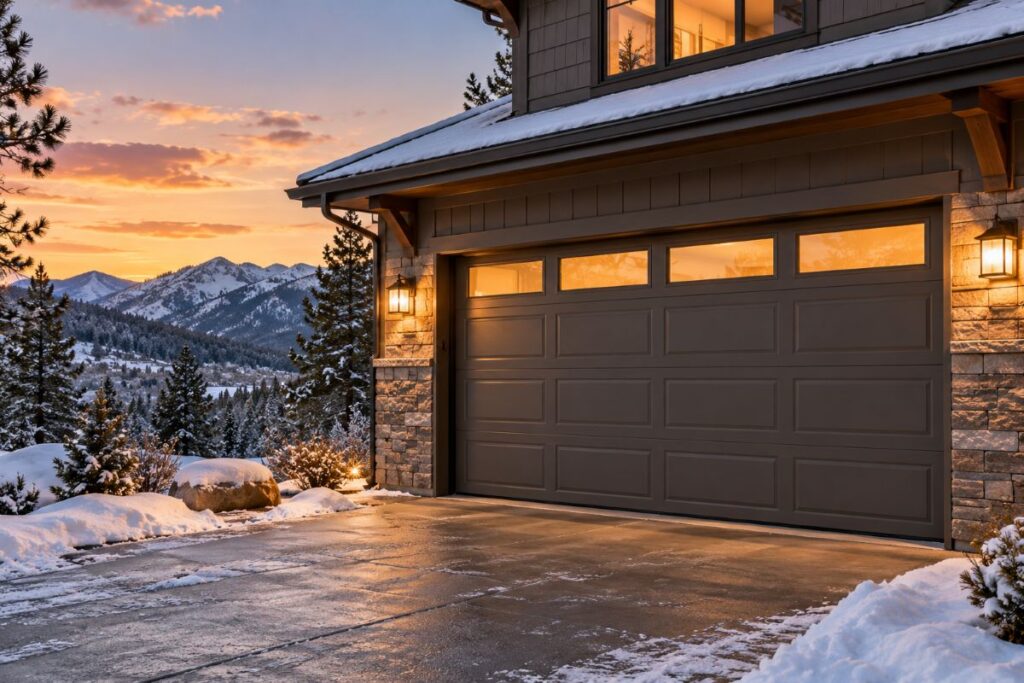
Can a New Garage Door Help Save Energy?
When winter rolls into the Colorado foothills, keeping your home warm becomes a priority. But while homeowners focus on windows, insulation, and heating systems, one potential source of energy loss often gets overlooked: the garage door.
If your garage door is older, poorly insulated, or doesn’t seal properly, it could be allowing cold air into your garage and making it harder to maintain comfortable temperatures in adjoining rooms.
So, can replacing your garage door actually help save energy? Yes, especially if your garage is attached to your home. Here’s what homeowners along the Highway 285 corridor should know.
How Your Garage Door Affects Energy Efficiency
Your garage door is one of the largest openings in your home. When it’s closed, it should help protect your garage from outside temperatures, wind, and moisture.
Unfortunately, many older garage doors offer little insulation. Some are made from a single layer of metal, allowing heat to transfer easily between the garage and the outdoors.
During a Colorado winter, that can mean:
- Colder temperatures inside your garage
- More heat loss from rooms adjacent to or above the garage
- Increased demand on your home’s heating system
- Drafts around the garage door’s edges and bottom
While your garage doesn’t necessarily need to be heated, reducing temperature extremes can help improve comfort throughout your home.
The Benefits of an Insulated Garage Door
Modern insulated garage doors are designed to provide better thermal protection than traditional single-layer doors. Many feature polyurethane or polystyrene insulation sandwiched between layers of steel or other materials. These doors offer several advantages.
#1 Better temperature control: Insulation slows heat transfer, helping your garage stay warmer during winter and cooler during summer.
#2 Improved comfort: If you have a bedroom, office, or living space above or beside your garage, better garage insulation may help reduce cold floors and uncomfortable temperature differences.
#3 Reduced outside noise: Insulated doors can also help dampen sounds from traffic, wind, and neighborhood activity.
#4 Stronger construction: Many insulated garage doors feature multiple layers, providing greater rigidity and durability than basic single-layer models.
What Is Garage Door R-Value?
When shopping for an energy-efficient garage door, you’ll probably encounter the term R-value. R-value measures how well insulation resists heat flow. Generally, the higher the R-value, the better the insulation performs. However, insulation isn’t the only consideration. A garage door with a high R-value can still lose energy if there are gaps around the edges or damaged weatherstripping.
That’s why proper installation and sealing are just as important as choosing an insulated door.
Don’t Forget About Weatherstripping
Even a well-insulated garage door can let cold air inside if the seals are worn out. In mountain communities like Conifer, Bailey, Pine, and Evergreen, wind-driven snow and freezing temperatures can make these gaps especially noticeable.
Check for:
- Cracked or flattened bottom seals
- Daylight visible around the closed garage door
- Cold drafts along the sides
- Damaged weatherstripping near the top
- A door that doesn’t close evenly against the floor
Sometimes, replacing weatherstripping or adjusting the door is enough to make a noticeable improvement without replacing the entire system.
Is a New Garage Door Worth the Investment?
If your existing garage door is in good condition, upgrading the seals or adding insulation may be a practical first step. However, if your door is aging, damaged, difficult to operate, or poorly insulated, replacement may offer several benefits at once.
A new garage door can improve your home’s appearance, provide smoother operation, reduce outside noise, and improve thermal performance.
Will it dramatically lower your heating bills? Not necessarily. Actual savings depend on your garage’s construction, whether it’s attached to the house, the insulation in surrounding walls and ceilings, and how often the garage door opens.
But a properly installed, insulated garage door can be a valuable part of making your home more energy-efficient.
Upgrade Your Garage Door Before Colorado Winter Arrives
At 285 Garage Doors, we understand the challenges of living in Colorado’s foothill communities. From freezing temperatures to heavy snow and strong winds, your garage door needs to stand up to changing mountain weather.
We help homeowners in Conifer, Bailey, Pine, Evergreen, and surrounding Highway 285 communities with garage door repairs, maintenance, and replacement. Whether you’re considering a new insulated garage door or simply need help fixing an old, drafty one, we’re here to help.
Contact 285 Garage Doors today to discuss your options and get your garage door ready for the colder months ahead.